
Commercial: Waste and recycling
Pest control for waste and recycling sites
Rats and mice live where waste is stored and sorted, and gulls and crows work the open bays. We proof, treat and plan visits around your tipping hours.
The problem
What goes wrong on these sites
Waste sites feed rats and mice all year. They burrow under slabs and bales, nest in stored material and spread into offices and neighbouring land. Gulls and crows tear bags, spread litter and gather over open bays, which brings noise and complaints. Wasps nest in quiet corners in summer. Food is always on site, so the aim is to cut access and cover and keep numbers down.
Our approach
What we would do
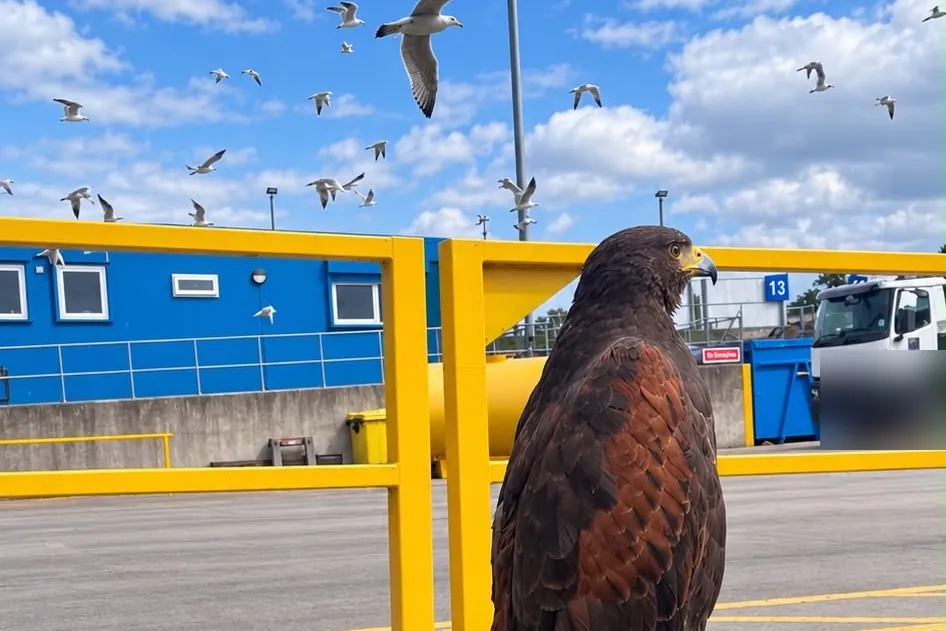
A survey maps burrows, runs and the bays birds use. We proof buildings, set monitoring points and treat rodents on a regular round. Housekeeping advice covers storage, covering and the spots that draw pests in. Where gulls and crows gather over open waste, hawk patrols with a trained Harris’s hawk can be timed to the busiest hours. Visits follow an agreed pattern, and we review results with you.
On site
We work to your site rules and induction, wear the PPE you require and keep clear of moving plant. A risk assessment and method statement (RAMS) is supplied before the first visit.
How a job runs
-
Step 1
Survey
We look at the problem on site, inside and out, and find where the pests get in.
You get A plain read of the problem. The site visit is free.
-
Step 2
Plan and price
The method and the visits, and for businesses a risk assessment and method statement (RAMS).
You get A written price before any work starts.
-
Step 3
Treatment or installation
Bait and proofing, nest treatment, spikes, netting or a flown hawk, whichever the site needs.
You get The work done by Steven himself.
-
Step 4
Check
We come back and check it has worked.
You get A short note of what we found.
-
Step 5
Prevention
The fix that stops it coming back: proofing, housekeeping and, for businesses, planned visits.
You get Advice in writing, and a visit plan if you want one.
Risk assessment and method statement
Paperwork before the first visit
Every commercial site gets a risk assessment and method statement (RAMS) before the first visit. It is written for your site, not copied from a template.
- Site hazards
- Moving vehicles, plant, public areas and how we keep clear of them
- The method
- Proofing, bait placements, netting, nest treatment, and a trained hawk only where one is used
- People
- Staff and public briefing, exclusion areas while we work, induction requirements
- Timing
- Visit times agreed around your operations
- Law and welfare
- Nesting season limits, licences where they apply, and bird welfare
- Waste
- Registered waste carrier (Environment Agency, upper tier, CBDU606377), so guano and nest material can be removed and disposed of legally.
- Insurance
- £5 million
Ask to see an example RAMS when you book a site visit.
Related
Services for these sites
Gull control
Gull deterrence and roof proofing, planned before the nesting season.
Insect and wasp control
Wasp nests treated in eaves, lofts, sheds and gardens, plus other insect pests.